
10 largecaps stocks which stand to gain from the Budget.

Infrastructure bond issuances by commercial banks in the current financial year (FY25) are likely to surpass Rs 1 trillion, almost double that of FY24, market participants said. So far this financial year, banks have raised Rs 74,256 crore via infra bonds. In FY24, the total issuances stood at around Rs 51,081 crore.

Co-location attracts institutional investors, which drives volumes for long-dated options, with higher realisations at lower costs.

The Delhi assembly results have underscored that a section of Arvind Kejriwal's committed supporters abandoned him because they were let down by his refusal to take a stand on crucial issues that impinge on the security and Constitutionally enshrined rights of the people, notes Nilanjan Mukhopadhyay.

Public sector banks (PSBs) have proposed the Finance Ministry their plan to raise Rs 54,800 crore through Additional Tier-1 (AT-1) and Tier-2 bonds in the current financial year (FY25), 37 per cent more than the Rs 39,880 crore raised in FY24

'We are working with a few housing finance companies to drive affordable lending because that's where we believe our sweet spot is.'

Bain Capital-backed Tyger Capital is planning to list its shares on the Indian stock exchanges by the next financial year and is targeting to grow its assets under management by four times to Rs 20,000 crore in five years from Rs 5,000 crore now, Gaurav Gupta, MD and CEO of the firm said. In an exclusive interview, Gupta said that keeping with the growing business, the finance company expects to on-board 600 people in the current financial year as it is opening 60-65 new branches for broad-basing its network in the country.

The race to acquire diversified fintech firm Religare Enterprise Limited (REL) intensified as Dabur group promoters, the Burman family, said it was going ahead with the open offer on Monday and claimed that the counter offer made by US-based businessman Digvijay Gaekwad wasn't valid and will not stand scrutiny of market regulator Sebi. The Burman family claimed that the competing offer falls outside the 15-day window stipulated by the Sebi takeover code, following their initial offer on October 4th, 2023.

The Union Finance Ministry on Tuesday said that aggregate business of public sector banks (PSBs) has shown strong growth of 11 per cent in the first half of the financial year 2024-25 (H1FY25) to touch Rs 236 trillion. The operating and net profit were also robust. At Rs 1.5 trillion, operating profit grew by 14.4 per cent year-on-year (Y-o-Y) while the net profit saw an impressive 25.6 per cent jump at Rs 85,520 crore in the first half of FY25.

Of the total 199 small and medium enterprises (SMEs) listed this year so far, 22 had an issue size of less than Rs 10 crore, which the Securities and Exchange Board of India (Sebi) will no longer allow in the listed ecosystem after its recent consultation paper. The market regulator on Tuesday proposed an overhaul of the rules governing the initial public offerings (IPOs) of SMEs and corporate governance norms for listed SMEs, following concerns over 'systemic risk' seen in the ecosystem with instances of fund diversion and price manipulation.

The US is currently Earth's most powerful country and a certain latitude of understanding -- a world view -- is popularly expected from its leadership. From a country identified with freedom, constitution, debate, democracy and the likes of Abraham Lincoln even as it had the most powerful military around, the US, following Trump's actions, seemed repositioned as militarily powerful with other qualities secondary, observes Shyam G Menon.

The three day MPC meeting began on Monday and the decision will be announced on Wednesday by RBI Governor Shaktikanta Das.

When evaluating bonds, returns shouldn't be the sole factor. Pay close attention to the bond's credit rating. It should ideally be AA or higher.
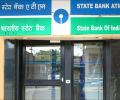
SBI's overall gross NPA as on end-December 2013 was close to Rs 68,000 crore ( Rs 680 billion) or 5.73 per cent of its gross advances.

A user just needs to download any app floated by such fraudsters and apply for instant loans. These apps are mainly concentrated on Google Play considering the reach and popularity of Android systems.

'One way of doing this could be offering credit guarantee to the banks, say 10 per cent, for fresh loans given to micro, small and medium enterprises,' observes Tamal Bandyopadhyay.

Under the proposed rules, mutual funds may not be allowed to borrow more than 20 per cent of the net assets of a scheme and the duration of such borrowing would not exceed six months.

this move by the government is likely to iron out the current challenges for the NBFCs and in turn help the real estate sector.

'There has been a change in the advances mix, with the share of corporate loans decreasing.'

Lenders have become worried as some dealers were not using the money provided to them for car financing.

'Barring a temporary blip where stocks fell on verdict day, we are back to all-time highs.'

The poll aspirants who feel threatened are seeking to garner sympathy from their voters by meeting influential leaders like Jarange in the Marathwada region

'With tuition fees for international students rising, education loans have become critical for bridging the gap between savings, scholarship, and full cost.'

India Inc continued to grapple with muted revenue growth in the September 2024 quarter (Q2FY25) and witnessed a decline in margins and profits. The headwinds were especially severe for non-financial companies, while banking, financial services, and insurance (BFSI) firms significantly outpaced the rest of the corporate sector. The total profit of 1,353 listed companies that have released their Q2FY25 results thus far dropped by 0.6 per cent year-on-year (Y-o-Y) - the first cumulative earnings decline in eight quarters.

Over the weekend, many companies stepped in to ease the bottleneck in supply and transportation of oxygen, as demand ran high with the surge in cases.

'Within India, people want high-quality, personalised banking services, and the demand for such services has exploded.'
Lending and borrowing of securities for short-selling at stock exchanges will not attract Securities Transaction Tax or capital gains tax.
"The lending/borrowing activity of FIls is being monitored and if necessary stronger measures will be taken by Sebi as considered appropriate," the market regulator said. Sebi asked custodians to communicate to their foreign institutional investors the disapproval of Sebi in this regard.

'The Casa ratio is at 33.4 per cent, which has to keep improving. Right now, there is a bit of liquidity pressure in the market.'

'Whether I am optimistic or pessimistic is not the issue; I am just going by the evidence available.' 'The Indian economy and financial sector are now well-placed and very resilient in dealing with any kind of spillover coming from the external world.'

The Reserve Bank on Wednesday imposed business restrictions on Edelweiss Group's lending and asset reconstruction arms on concerns over evergreening of loans. The central bank has asked ECL Finance Ltd (ECL) to cease and desist from undertaking any structured transactions in respect of its wholesale exposures, other than repayment and/or closure of accounts, an official statement said.

Yes Bank on Saturday reported over two-fold jump in standalone net profit at Rs 452 crore for March quarter 2023-24, primarily due to benefits on the provision front. In the year-ago quarter, the bank logged a profit of Rs 202.43 crore. The private sector lender benefitted from write-back on income tax and interest on income tax returns, but the profits were limited by its inability to comply with the mandatory priority sector lending (PSL) requirements, its management said.

Dr Nagesh Kumar, one of the three new MPC members, wanted the MPC to reduce the repo rate by 25 basis points to 6.25%.

Borrowing from a fraudulent loan app subjects the borrower to a variety of risks.

Once declared a dud stock, Suzlon has generated stellar returns for investors thus far this calendar year. On a year-to-date (YTD) basis, Suzlon's share price has doubled investor wealth by soaring 109.35 per cent on the bourses. By comparison, the benchmark BSE Sensex has gained just 11.2 per cent.

In yet another move to close the regulatory gap between banks and shadow banks, the Reserve Bank of India (RBI) has mandated exposure limits to the non-banking finance companies, in line with commercial banks. In the large exposure framework released on Tuesday, the regulator capped aggregrate exposure of NBFCs which are in the upper layer toward one entity at 20 per cent of capital base. The limit can only be extended by another 5% with board's approval. For a particular borrower group, the cap is at 25 per cent, with additional 10 per cent if exposure is towards infrastructure.
Indian fintechs and associated entities are hoping that the Union Budget 2024 will provide a boost and empower firms to extend their reach beyond Tier-II regions, with an emphasis on supporting enterprises led by women. The fintech industry, which has witnessed regulatory reforms over the last year, expects the Budget, scheduled to be presented by Finance Minister Nirmala Sitharaman on February 1, will further encourage financial inclusion, empower micro-small-medium enterprises (MSMEs) with lending solutions, and push for upskilling initiatives for the country's young workforce.
Public-sector banks, including Canara Bank and Bank of India, are tapping the infrastructure bond market. Canara Bank on Tuesday raised Rs 10,000 crore at a coupon rate of 7.40 per cent through 10-year infrastructure bonds. This comes after SBI on July 10 raised Rs 10,000 crore also through infrastructure bonds with a 15-year tenor at a coupon rate of 7.36 per cent.

At the heart of Paytm's slide lies the abject failure of its Super App strategy, notes Indrajit Gupta.

'Try to obtain a secured personal loan or credit card by offering some collateral, such as a fixed deposit or gold.' 'Not only will this improve your eligibility, but the lender may even offer a lower interest rate.'
